Handling toxic backlinks in Bangladesh needs a proactive SEO routine. First, audit your backlink profile in Google Search Console by checking the Links report and Manual actions, then look for clear red flags like PBNs, link farms, gambling/adult/pharma sites, foreign-language spam, sudden link spikes, and keyword-stuffed anchor text.

Next, request manual removal through email or contact forms and track every attempt in a spreadsheet for at least 2 weeks. Finally, if removals fail, use Google’s Disavow Tool carefully as a last resort to protect your rankings from negative SEO and poor-quality link building, and keep monitoring monthly so the issue does not return.
Key Takeaways
- Start with GSC Links, then use an audit tool if needed
- Treat toxicity scores as a hint, then confirm with manual review
- Check anchor text for forced or keyword-stuffed patterns
- Try manual removal first and log proof in a spreadsheet
- Use Disavow only as a last step, then monitor monthly
See how our backlink audits and cleanups performed in our case studies.
What Are Toxic Backlinks vs Low-Quality Links?
A backlink is a link from another website to your website. Your backlink profile is the full set of those links. However, Google looks at relevance and intent, so a high link count does not guarantee safety when you learn How to Handle Toxic Backlinks.
Toxic backlinks often come from link farms, PBNs (Private Blog Networks), hacked pages, or irrelevant websites. For example, a gambling site linking to a Bangladeshi law firm can look unnatural and raise risk signals. So, focus on repeated patterns and clear red flags instead of worrying about one weak link.
Signs of Toxic Backlinks and Link Spam to Check

Most sites can ignore a few spammy links. However, repeated patterns can raise risk, so scan for these warning signs:
- Links from irrelevant niches like gambling, adult, or pharma
- Link farms or obvious PBN-style sites
- Foreign-language pages that do not match your niche
- Sitewide footer/sidebar links across many pages
- Sudden spikes in low-quality referring domains
- Keyword-stuffed or repeated exact-match anchor text
Next, check your anchor text closely because it often shows intent. If the same money keyword keeps repeating, review those links first.
Ranking Drop? First 30 Minutes Checklist (GSC)
A ranking drop can happen for many reasons. So, run a few fast checks first, then act with proof instead of guessing.
First 30 minutes checklist
- Compare the last 7 days vs the previous 7 days in GSC Performance.
- Check Manual actions for “Unnatural links to your site.”
- Check for security issues for hacks or malware warnings.
- Export data from the Links report for your backlink audit.
- Note the first date of the drop and pause any paid link or link-exchange activity.
- Start a simple spreadsheet log to track what you review and change.
Finally, remember that Google often ignores isolated spam links. However, if you see a real traffic drop or a manual action, start the cleanup right away.
How to Find Toxic Backlinks in GSC Step-by-Step
To learn How to Handle Toxic Backlinks, start with a simple audit flow. First, use Google Search Console (GSC) for free data, and then use SEO tools only if you need faster filtering.
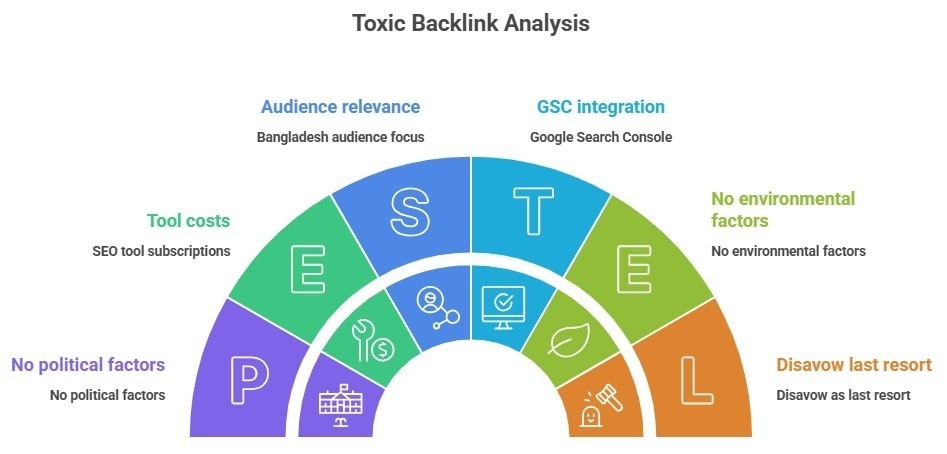
Step 1: Export Backlink Data from Google Search Console
- Open Links in GSC
- Export Top linking sites and Top linking text (anchor text)
- Add the exports to a spreadsheet, remove duplicates, and sort by suspicious domains or odd anchors
Step 2: Use Semrush, Ahrefs, or Moz to Flag Risky Links
Tools like Semrush Backlink Audit, Ahrefs, or Moz Link Explorer can flag high-risk links. However, treat “toxicity” as a signal, then confirm manually.
Step 3: Manually Verify Red Flags and Anchor Text
Ask these questions:
- Does the site match your niche and the Bangladesh audience?
- Does the page look real, or does it look like thin content?
- Does it link out to many spam sites?
- Does the anchor text look forced or keyword-stuffed?
When the answers look bad, move the domain to Remove or Disavow for the next step. If you want expert help with backlink audits and cleanup, explore our SEO services in Bangladesh.
How to Remove Toxic Backlinks with Outreach Log
Google prefers manual removal before you disavow. So, start with outreach first and keep proof in a simple spreadsheet.
Outreach steps
- Find contact info (email or contact form)
- Send a short, polite removal request
- Include the source URL and the page it links to on your site
- Track every attempt and reply
Spreadsheet proof to track
- Domain
- Source page URL
- Target page
- Contact method
- Date sent
- Follow-ups
- Result (removed/ignored/refused)
Email template: removal request
Subject: Request to remove a link to our website
Hello,
I found a link to our website on this page: [Source URL].
Please remove the link. We did not request it, and we want to keep our backlink profile clean.
Thanks,
[Name]
How to Use Google Disavow Tool Safely in GSC
If manual removal fails, you can use the Google Disavow Tool to ask Google to ignore harmful links. However, use it only as a last step because a wrong disavow can hurt rankings.
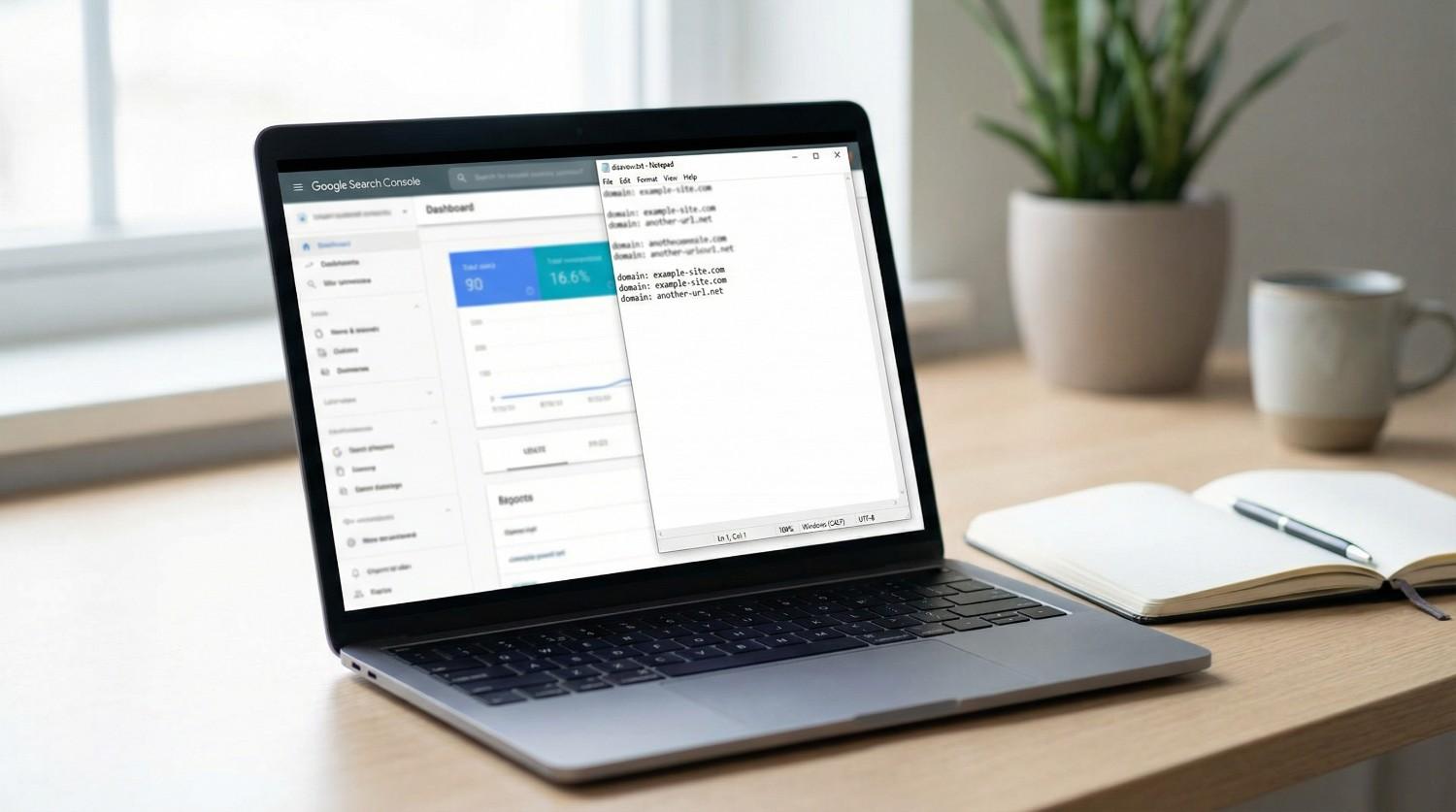
Create a safe disavow file
- Make a .txt file in UTF-8 (or 7-bit ASCII)
- Add one domain or URL per line
- Use domain: for full domains
# Disavow file
domain:example.com
domain:spammysite.com
Upload and keep a record
Next, upload the file to the Disavow Links page for your Search Console property, then save the file version and upload date. Finally, disavow only when you see clear spam patterns or a manual action in GSC, because Google often ignores isolated spam links.
Safe Backlink Practices for Bangladesh SEO Sites
Bangladesh sites often pick up spam links from directories, classifieds, and random foreign pages. So, if you want to learn How to Handle Toxic Backlinks long-term, keep a simple monthly routine.
Best practices in Bangladesh:
- Monitor backlinks at least once a month, especially after campaigns
- Create local, helpful content so you earn natural links
- Prefer relevant and trustworthy sites over “more links”
- Use Domain Authority as a clue, not a final decision
- Avoid cheap SEO services that promise thousands of backlinks fast
- Skip PBN packages and link farm offers
- Secure your site so hackers cannot inject spam links
Tools and Templates for Toxic Backlink Cleanup
Use this quick table as your simple workflow. First, export link data, then review risk, next try removal, and finally disavow only if needed.
| Step | Tool | What you do |
| Identify | Google Search Console | Export Links + anchor text |
| Audit | Semrush/Ahrefs/Moz | Flag high-risk links, then confirm manually |
| Remove | Email + spreadsheet | Outreach and log proof |
| Disavow | Google Disavow Tool | Upload a UTF-8 .txt file as a last resort |
| Monitor | GSC monthly | Watch new domains and link spikes |
Frequently Asked Questions
How do I know a backlink is toxic?
Check niche relevance, page quality, and anchor text patterns. Links from link farms, PBNs, adult/gambling/pharma sites, or keyword-stuffed anchors often signal toxicity.
Should I always remove links manually before disavow?
Yes. Google prefers manual removal attempts, so outreach first and keep a spreadsheet proof.
When should I use the Disavow Tool?
Use it when manual removal fails, and you see clear spam patterns, or when GSC shows a manual action for unnatural links.
Can disavowing hurt my rankings?
Yes, if you disavow good links. So, use it only as a last resort and confirm links by manual review.
How often should I monitor backlinks in Bangladesh?
Monthly works best for most sites. If you see frequent spam spikes, check more often.
Final Checklist and Next Steps for Toxic Backlinks
Now you have a clear system for How to Handle Toxic Backlinks in Bangladesh: first, identify and audit links, then try manual removal, and use disavow only as a last resort. After that, monitor monthly so spam links do not build up again, and avoid cheap link schemes that often create toxic PBN links.
If you want support, Branding Dask can audit your backlink profile, organize your outreach logs, and guide safe disavow work when your case truly needs it.

Business Growth Expert with 7+ years of experience driving scalable growth through full stack digital marketing, including SEO, SEM, paid ads, AI automation, and content led strategies.