What Is Search Intent in SEO? Guide to Matching User Intent
- Published
- Updated

9 min read
On this page
- What Is Search Intent in SEO? Guide to Matching User Intent
- What Are the 4 Types of Search Intent?
- What Are Google’s Search Intent Categories?
- Can One Keyword Have More Than One Search Intent?
- How Can You Identify Search Intent?
- How Is AI Search Changing Search Intent?
- Which Search Intent Should Your Business Target First?
- What Search Intent Mistakes Can Hurt Your SEO Rankings?
- Need Help Matching Search Intent?
Search intent in SEO is the reason behind a user’s search query. It describes what someone wants to accomplish when they type words into Google, whether that’s learning about a topic, finding a specific website, comparing products, or making a purchase. Google aims to rank the pages that best match this intent, which is why search intent is one of the most important factors in modern SEO.
For example, someone searching “best SEO agency in Bangladesh” is comparing different agencies, while “hire an SEO expert” shows they’re ready to contact or hire someone. Even though both keywords are about SEO services, the search intent is different.
If your content doesn’t match search intent, it can struggle to rank even if it’s well written. In this guide, you’ll learn the four types of search intent, why they matter, and how to create content that attracts the right audience and earns more organic traffic.
What Is Search Intent in SEO?
Search intent is the reason behind a user’s Google search. It reflects what someone wants to achieve, whether that’s learning about a topic, comparing options, buying a product, or visiting a specific website. Google ranks pages that best satisfy this goal, not just pages that contain the right keywords. If you are new to this, our guide to how SEO works covers the basics first.
For example, someone searching “what is SEO” wants information, while “best SEO agency in Bangladesh” is looking to compare companies. A search for “buy SEO course online” shows the user is ready to make a purchase. Although all three searches include SEO, they have completely different search intent.
This is why search intent is one of the most important parts of SEO. When your content matches what users expect, it has a much better chance of ranking higher, attracting the right audience, and earning more organic traffic.
Why Does Search Intent Matter for SEO Rankings?
Search intent matters because Google ranks pages that best satisfy what users want. When your content matches the searcher’s goal, whether it’s to learn, compare, or buy, it’s more likely to rank higher and keep visitors engaged.
For example, someone searching “how to improve SEO” expects a helpful guide, not a service page. If Google shows content that doesn’t match the user’s intent, people quickly leave and look for a better result. That’s why even high-quality content can struggle if it targets the wrong intent.
Matching search intent helps you attract the right audience, improve user engagement, and increase your chances of ranking higher. It also ensures every page has a clear purpose, making your SEO strategy more effective and driving qualified organic traffic instead of visitors who leave without taking action.
What Are the 4 Types of Search Intent?
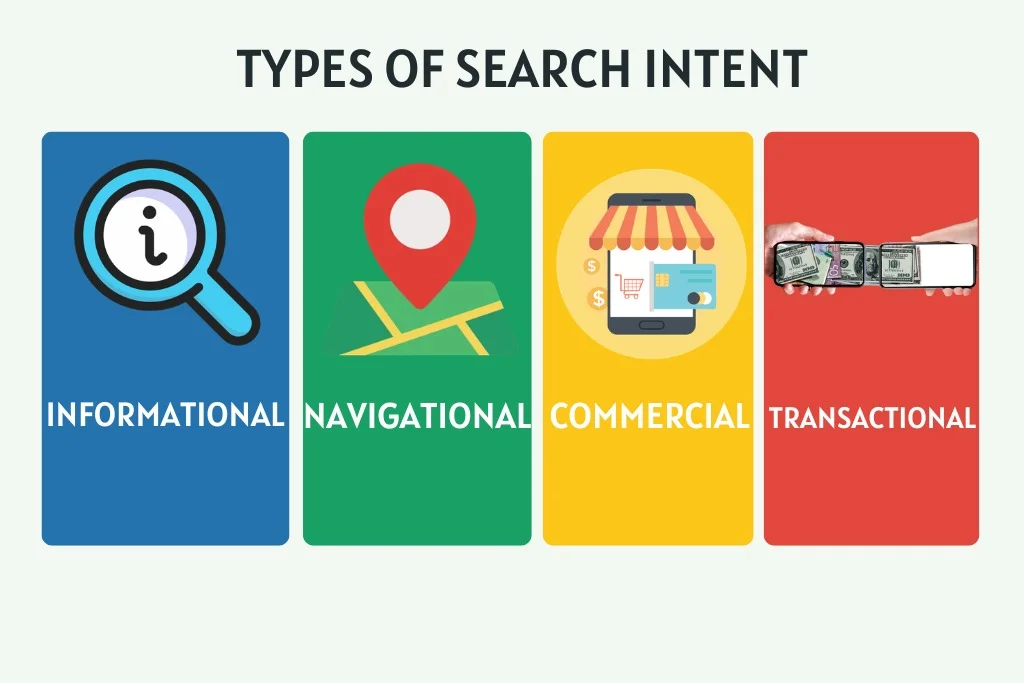
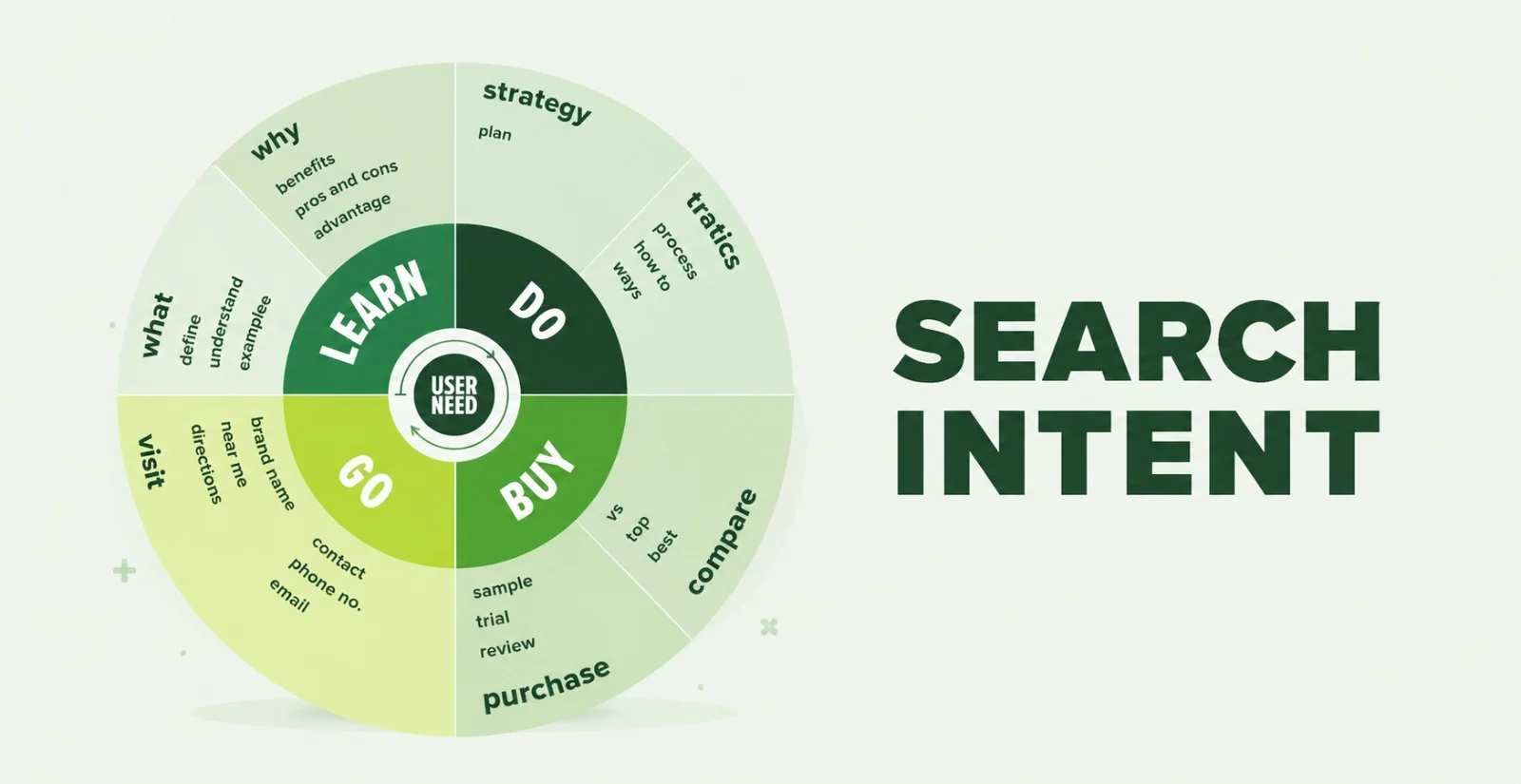
Search intent is usually grouped into four main types. Each type reflects a different goal, so Google ranks different kinds of pages for each one. Understanding these intent types helps you create content that matches what users are looking for and improves your chances of ranking.
1. Informational Intent
Users want to learn or find an answer to a question.
Examples: what is SEO, how does Google rank pages, why is my website not showing on Google
The best content for informational intent includes guides, tutorials, FAQs, and step-by-step articles that provide clear, helpful answers.
2. Navigational Intent
Users already know which website or brand they want to visit.
Examples: Facebook login, YouTube Studio, Google Search Console
The best result is usually the official website or landing page. If people search for your brand, make sure they can find it easily.
3. Commercial Intent
Users are researching and comparing options before making a decision.
Examples: best SEO agency in Bangladesh, Ahrefs vs Semrush, best email marketing tools
Comparison articles, reviews, product roundups, and buying guides work best because they help users evaluate their options.
4. Transactional Intent
Users are ready to take action, such as buying a product or booking a service.
Examples: hire SEO expert, buy standing desk online, SEO services pricing
Service pages, product pages, and pricing pages perform best because users are ready to convert.
Understanding these four search intent types helps you choose the right content format for every keyword. When your content matches what users expect, it’s more likely to rank well, attract qualified traffic, and improve your overall SEO performance.
Google’s own definition: with CPC bidding, you pay for each click on your ad.
What Are Google’s Search Intent Categories?
Google uses its own search intent categories to understand what users want and decide which pages deserve to rank. While SEO professionals often group intent into four types, Google’s Search Quality Evaluator Guidelines classify searches as Know, Know Simple, Do, Website, and Visit-in-Person. These categories help explain why different searches return different types of results.
| Google’s Category | User’s Goal | SEO Intent Type |
| Know | Learn about a topic | Informational |
| Know Simple | Get a quick factual answer | Informational |
| Do | Complete an action or purchase | Transactional |
| Website | Visit a specific website | Navigational |
| Visit-in-Person | Find a nearby business or place | Local Intent |
Understanding these categories helps you create content that matches Google’s expectations. For example, Know queries work best with detailed guides, while Do queries need product or service pages. Visit-in-Person searches, such as “coffee shop near me”, usually show local map results instead of blog posts. Matching your content to the right intent improves your chances of ranking and attracting the right audience.
Can One Keyword Have More Than One Search Intent?
Yes. Some keywords have mixed search intent, meaning users may have different goals even when they use the same search term. As a result, Google can rank different types of content for the same keyword, such as blog posts, comparison pages, product pages, or service pages.
For example, the keyword “best air fryer” can show review articles, buying guides, and shopping pages because some users want to compare options while others are ready to buy. Similarly, “SEO cost in Bangladesh” may display both pricing guides and agency service pages. In these cases, always analyse the search results before creating content.
If most top-ranking pages are guides, create an informative article. If they’re mostly service or product pages, build a conversion-focused page instead. When the search results are evenly split between different formats, creating two separate pages—one for each intent—and linking them together is often the best strategy. This approach helps you satisfy different audiences while increasing your chances of ranking for the same keyword.
How Can You Identify Search Intent?
The easiest way to identify search intent is by analysing Google’s search results, not just the keyword itself. Search your target keyword in an incognito window, check the top-ranking pages, and look for the type of content Google is rewarding. The search results always reveal the dominant intent.
Follow this simple five-minute process:
- Search the exact keyword in an incognito window using your target country.
- Check the top 10 results and identify whether they are guides, product pages, service pages, comparison articles, or videos.
- Look for SERP features like AI Overviews, Featured Snippets, People Also Ask, Map Packs, or Shopping results.
- Note common keyword modifiers and match them to the likely intent.
| Keyword Modifier | Likely Search Intent |
| what, how, why | Informational |
| best, top, review, vs | Commercial |
| buy, hire, order, price | Transactional |
| login, brand name | Navigational |
Finally, write a simple conclusion such as “Intent = Informational. Format = Guide.” This ensures your content matches what Google is already ranking, giving you a better chance of attracting the right audience and earning more organic traffic.
Reading intent only helps once you have keywords to read. Our step-by-step keyword research guide covers how to build that list first.
How Is AI Search Changing Search Intent?
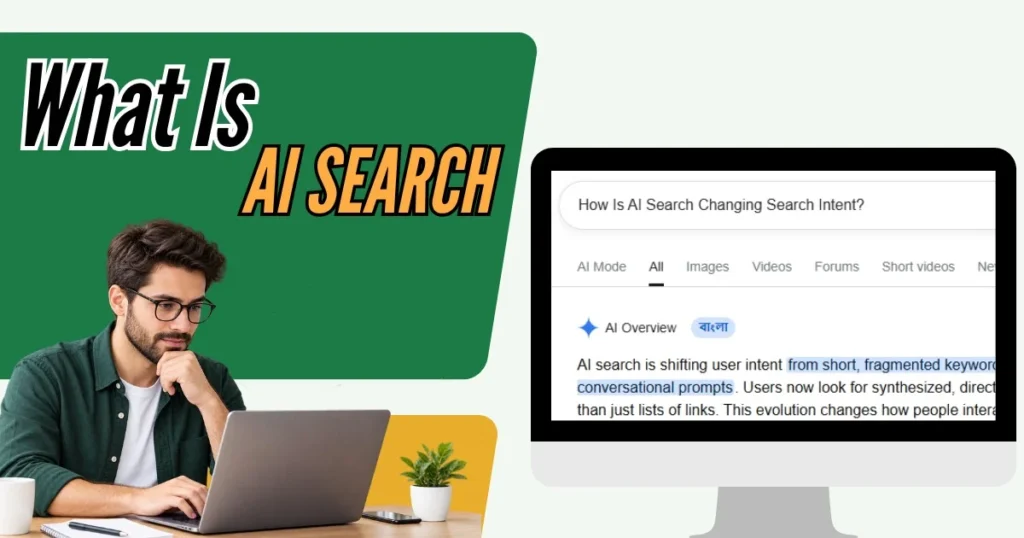
AI-powered search tools like Google AI Overviews, ChatGPT, and Gemini are changing how people find information. Many informational questions are now answered directly in search results or AI chatbots, which means fewer users click through to websites for basic answers. As a result, creating content that simply explains a topic is no longer enough.
Google now documents how this works. Its generative AI search guide explains query fan-out, where the model fires off several related queries behind a single search, so one page can be pulled in for questions the user never typed. Ahrefs tested this across 15,000 prompts and found only about 12% of the URLs cited by ChatGPT, Gemini and Copilot rank in Google’s top 10 for the same prompt.
To stay competitive, focus on content that AI can’t fully replace. Commercial, transactional, and local searches still drive valuable clicks because users want to compare options, make purchases, or find nearby businesses. For informational content, structure your pages with clear question-based headings, concise answers, and trustworthy sources so they’re more likely to be referenced by AI systems.
The goal isn’t just to rank anymore; it’s to become a trusted source for both search engines and AI assistants. By matching search intent and creating accurate, well-structured content, you can increase your visibility, attract qualified organic traffic, and stay relevant as search continues to evolve.
How Do You Match Content to Search Intent?
To match content to search intent, create the type of page users expect to find and answer their main question as early as possible. When your content aligns with the searcher’s goal, Google is more likely to rank it because it provides the experience users are looking for.
| Search Intent | Best Content Type |
| Informational | Guides, tutorials, FAQs |
| Commercial | Comparisons, reviews, buying guides |
| Transactional | Service pages, product pages, pricing pages |
| Navigational | Homepage or brand-specific pages |
Before publishing, review the top-ranking pages for your target keyword. If Google mostly shows guides, create a guide. If service or product pages dominate the results, build that type of page instead. Matching the page format to search intent is one of the simplest ways to improve your SEO performance.
Which Search Intent Should Your Business Target First?
The best search intent to target depends on your business goals, but for most service-based businesses, it’s smart to prioritise transactional intent first. These users are ready to take action, making them more likely to become leads or customers. They are also where ads compete hardest, so it helps to know how organic vs paid search compare before you decide where the budget goes.
After building strong transactional pages, focus on commercial intent by creating comparison articles, reviews, and buying guides for users who are researching their options. Then invest in informational content to attract a wider audience, build authority, and grow long-term organic traffic.
This approach creates a balanced SEO strategy. Transactional pages drive immediate business opportunities, while commercial and informational content help you earn trust, increase visibility, and attract potential customers throughout their buying journey.
What Search Intent Mistakes Can Hurt Your SEO Rankings?
The biggest search intent mistakes happen when your content doesn’t match what users expect. This can lead to low rankings, poor click-through rates, or traffic that never converts.
| Problem | Cause | Fix |
| Low clicks | Title or content doesn’t match intent | Improve your title and content angle |
| Traffic but no conversions | Wrong page type | Create the right page for the keyword |
| Poor rankings | Content format doesn’t match the SERP | Analyse top results and update the format |
| Ranking drops | Search intent has changed | Review the SERP and refresh your content |
Check Google Search Console to spot these issues early, then compare your page with the current top-ranking results. Matching search intent is one of the fastest ways to improve rankings and attract more qualified organic traffic.
Need Help Matching Search Intent?
Choosing the right keyword is only half the job. Your content also needs to match what people are actually searching for. If it doesn’t, rankings and traffic can suffer.
If you’re not sure whether your pages match search intent, get a free SEO audit. We’ll review your key pages, identify intent gaps, and share practical recommendations to help you improve your rankings and attract more qualified organic traffic.