How Long Does SEO Take to Show Results?
- Published
- Updated

9 min read
On this page
- How Long Does SEO Take to Show Results?
- How Long Does SEO Take?
- Why Does SEO Take So Long?
- 7 Factors That Determine Your SEO Timeline
- SEO Timeline: What Should Happen Each Month?
- How to Know Your SEO Is Working
- How to Get SEO Results Faster
- Does Local SEO Work Faster?
- How Long Does SEO Take for a New Website?
- Final Thoughts
Wondering when your SEO efforts will actually start paying off? Most websites see early SEO improvements within 3–6 months, while stronger rankings, traffic, leads, and sales often take 6–12 months. Unlike paid ads, SEO needs time to build visibility and trust in search results.
The timeline can vary from business to business. New websites, competitive industries, and difficult keywords usually need more time, while established websites, local businesses, and lower-competition keywords may see progress sooner. Content quality, technical SEO, backlinks, and consistent effort also affect the speed of results.
You may first notice more impressions, better keyword rankings, and improved indexing. With continued optimisation, these early gains can turn into more organic traffic, enquiries, and sales, making SEO a long-term investment in business growth.
How Long Does SEO Take?
Wondering when your SEO efforts will start showing results? Most websites see early progress within 3–6 months, while stronger rankings, traffic, leads, and business growth often take 6–12 months. In the first few months, SEO usually focuses on building the right foundation rather than generating huge traffic.
A typical timeline looks like this: 1–3 months for technical fixes, keyword research, and indexing; 3–6 months for better rankings and early traffic growth; and 6–12 months for stronger visibility, authority, leads, and measurable business results. After 12 months, consistent SEO can create more stable and compounding growth.
Keep in mind that these are general timeframes, not guarantees. Competition, website age, content quality, technical health, backlinks, and consistent SEO work can all change the timeline. So, if your traffic is still low after a few weeks, don’t panic; look for early signs such as improving impressions, indexing, and keyword rankings.
Why Does SEO Take So Long?
SEO takes time because Google needs to discover, understand, and trust your website before improving its rankings. That trust-building step is built into how SEO actually works. Here are the main reasons:
- Crawling & Indexing: Google first needs to find, crawl, and index your pages before they can compete in search results.
- Content Quality: Your content needs to be useful, relevant, and match what people are actually searching for.
- Website Authority: A strong website history, quality content, and relevant backlinks can help build trust and authority.
- Competition: Your pages are competing with other websites that are also improving their SEO and content.
- Technical SEO: Issues like slow pages, broken links, or crawling problems can delay your progress.
- Continuous Improvement: SEO requires regular content updates, technical improvements, optimisation, and authority building.
That is why SEO is a long-term growth strategy, not a one-time fix. The goal is to move from better indexing and rankings to more organic traffic, leads, and sales over time.
7 Factors That Determine Your SEO Timeline
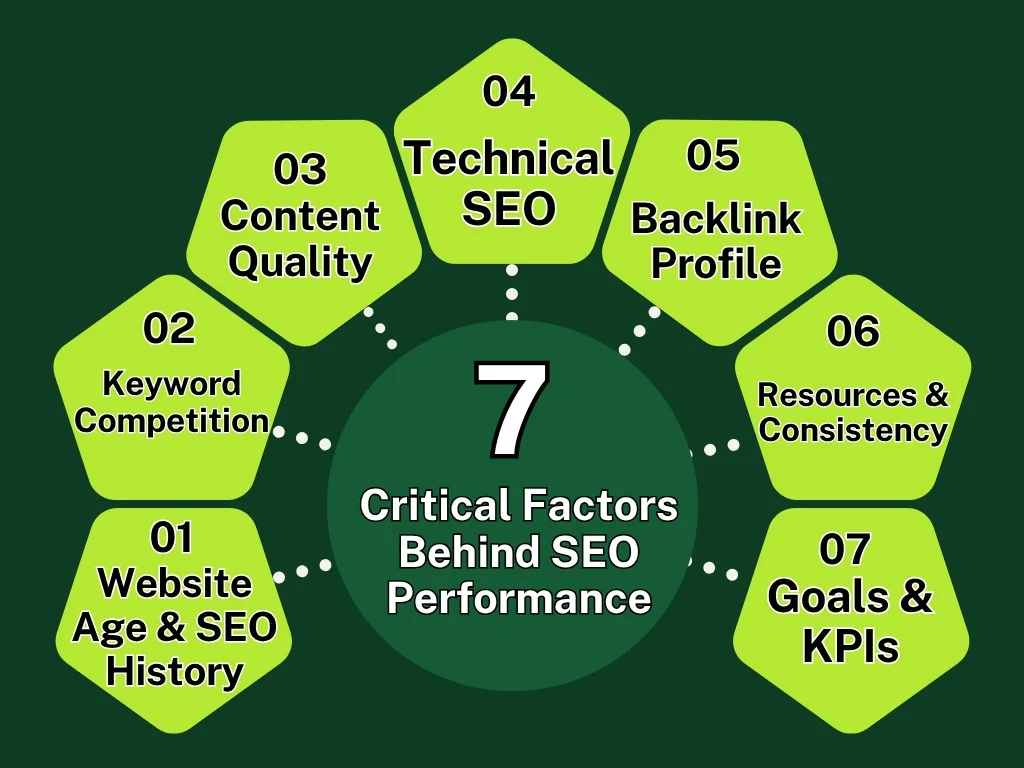
How quickly SEO works depends on more than just time. Your website, competition, content, technical health, and SEO strategy can all affect how fast you see results.
1. Website Age & SEO History
New websites usually take longer to rank because they have less content, authority, backlinks, and search history. An established website with a clean SEO history may see improvements faster.
2. Keyword Competition
The harder the keyword, the longer it can take to rank. Start with relevant long-tail and lower-competition keywords to gain early visibility, then target more competitive terms as your website grows. Our guide on how to research keywords shows how to find them.
3. Content Quality
Useful content can help your website earn better visibility. Your pages should answer real questions, match search intent, provide clear information, and offer something valuable to the reader. Quality is more important than simply publishing more content.
4. Technical SEO
Technical problems can slow down SEO results. Issues such as broken links, slow pages, crawl errors, poor mobile experience, or indexing problems can prevent search engines from properly accessing your website. Fixing these issues is the bulk of technical SEO work and gives your SEO a stronger foundation.
5. Backlink Profile
Relevant, trustworthy backlinks can strengthen your website’s authority. A few quality links from reputable and relevant websites can be more valuable than many unrelated or low-quality links.
6. Resources & Consistency
SEO needs consistent effort to produce lasting results. Content creation, technical fixes, optimisation, and link building all require time and resources. Even a strong strategy can move slowly if important work is constantly delayed.
7. Goals & KPIs
Your definition of “results” also affects the timeline. Ranking for one low-competition keyword may happen sooner than generating a large increase in qualified leads or sales. Track rankings, impressions, traffic, leads, and conversions to understand whether your SEO investment is delivering real business value.
SEO Timeline: What Should Happen Each Month?
Wondering what to expect from SEO month by month? SEO usually builds gradually, starting with technical improvements and moving toward better rankings, traffic, leads, and long-term growth.
Months 1–2: Build the Foundation
The first two months focus on getting your website ready to grow.
- Research and map the right keywords
- Fix technical and indexing issues
- Improve pages and internal links
- Analyze competitors
- Set up tracking and SEO goals
- Create a clear content plan
You may not see big ranking changes yet, and that’s normal. This stage builds the foundation for future results.
Months 3–4: See Early SEO Signals
This is when early progress may start becoming visible.
- More pages get indexed
- Search impressions increase
- New long-tail rankings appear
- Keywords start moving upward
- Organic traffic begins to grow
Use this data to improve pages that are close to page one and focus more effort on what is already working.
Months 5–6: Measure Real Progress
By this stage, SEO should provide clearer signs of growth.
- Stronger keyword rankings
- More organic traffic
- Better visibility for important pages
- More enquiries or early conversions
This is a good time to check whether your SEO strategy is actually supporting your business goals. If progress is completely flat, find the problem rather than simply waiting.
Months 7–12: Build Compounding Growth
With consistent SEO, different parts of your website can start working together. Older content can gain more visibility, new pages can benefit from stronger authority, and internal links and quality backlinks can support important topics.
The goal now shifts from “Can we get more traffic?” to “Can we attract the right traffic and turn it into customers?” This is where SEO can become a much stronger long-term growth channel for your business.
How to Know Your SEO Is Working
You don’t have to wait six months to know whether your SEO is making progress. Small improvements often appear first, and tracking the right signals can help you see whether your strategy is moving in the right direction.
1. Search Impressions Are Rising
More impressions in Google Search Console mean your pages are appearing for more searches. This is often one of the earliest signs that your SEO is gaining visibility.
2. Your Rankings Are Improving
If a keyword moves from position 70 to 35, you may not get much traffic yet, but it shows that your page is moving closer to the top. Consistent ranking improvements are a positive SEO signal.
3. More Long-Tail Keywords Are Ranking
When your website starts ranking for more specific searches, it shows that Google is understanding your content and the topics you cover.
4. Organic Traffic Is Growing
As your rankings improve, more people should find your website through search. But remember: qualified traffic is more valuable than just high traffic numbers.
5. Leads and Sales Are Increasing
The real goal of SEO is business growth. More enquiries, leads, bookings, or sales show that your SEO is attracting the right audience and turning search visibility into real business value.
How to Get SEO Results Faster
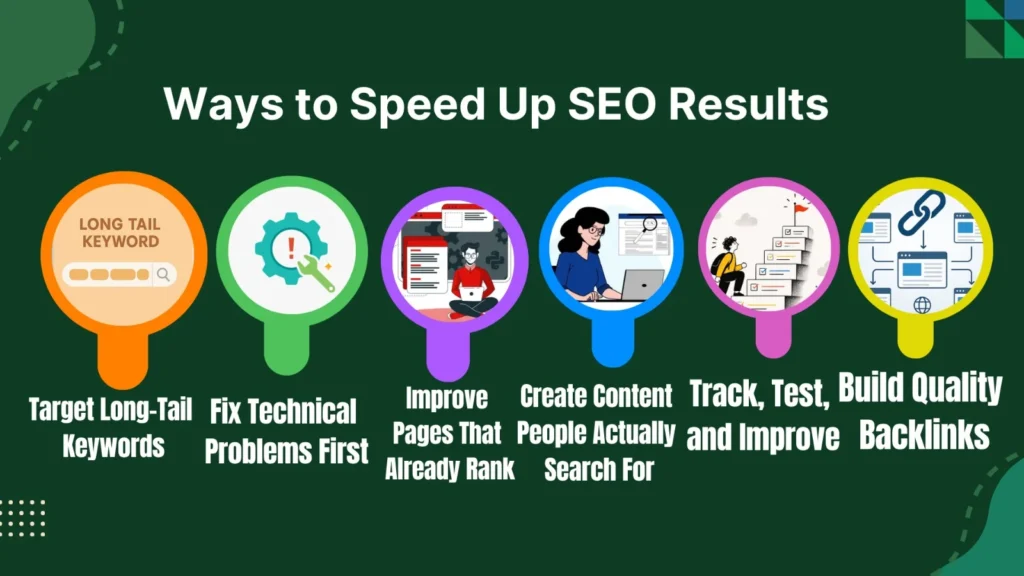
Want to see SEO progress sooner? You cannot skip the time SEO needs, but you can avoid common delays by focusing on the areas that can make the biggest difference.
1. Target Long-Tail Keywords
Start with specific, relevant keywords that have lower competition. They are often easier to rank for and can help new or smaller websites gain visibility sooner.
2. Fix Technical Problems First
Make sure Google can crawl and index your website properly. Fix issues like broken links, slow pages, and indexing errors before focusing heavily on new content.
3. Improve Pages That Already Rank
Have a page sitting on page two? Improve it instead of starting from scratch. Update the content, strengthen internal links, improve the title, and make the page more useful to users.
4. Create Content People Actually Search For
Don’t publish content just to fill your blog. Focus on real questions, problems, comparisons, and services your audience is searching for.
5. Build Quality Backlinks
Earn backlinks from relevant and trustworthy websites. A few strong, relevant links can be more valuable than a large number of low-quality links.
6. Track, Test, and Improve
SEO is not a one-time task. Monitor rankings, impressions, traffic, and conversions, then adjust your strategy based on what the data shows.
The goal is not to rush SEO; it is to remove unnecessary delays and focus your effort where it can create the most business value.
Does Local SEO Work Faster?
Yes, local SEO can sometimes show results sooner than national SEO, especially when you target a specific city or service area. Local businesses can focus on location-based searches, improve their local presence, earn genuine customer reviews, and build relevant local citations to increase visibility.
This gives businesses an opportunity to attract nearby customers even before their website ranks strongly on a national level. If your customers mainly search for services in a specific area, local SEO can be a practical way to build visibility and generate enquiries sooner.
How Long Does SEO Take for a New Website?
For a brand-new website, 6–12 months is a realistic timeframe to plan for, especially in a competitive industry. However, you can still see early signs of progress before that, such as more impressions, better indexing, long-tail keyword rankings, and small increases in organic traffic.
The best approach is to start with achievable opportunities and build from there. Target lower-competition keywords, publish useful content, improve your website’s technical foundation, strengthen internal links, and earn relevant backlinks. As your website builds authority, you can gradually move toward more competitive keywords and bigger growth opportunities.
The data backs this up. Ahrefs’ time-to-rank study found that only 1.74% of newly published pages reach Google’s top 10 within a year, and the average #1 ranking page is five years old — which is why a new site should plan in months, not weeks.
Final Thoughts
So, how long does SEO take to show results? For most websites, expect 3–6 months to see clear progress and around 6–12 months for stronger traffic, leads, and sales. New websites and highly competitive keywords may need more time.
The first signs usually appear in this order: Indexing → Impressions → Rankings → Traffic → Leads → Revenue. If these numbers are gradually improving, your SEO is moving in the right direction.
SEO works best when you target the right keywords, fix technical issues, publish useful content, and build relevant authority consistently. Want to know what is slowing down your website? Get a free SEO audit and find the pages, keywords, and technical issues that need attention first.